

21bit Australia Guide
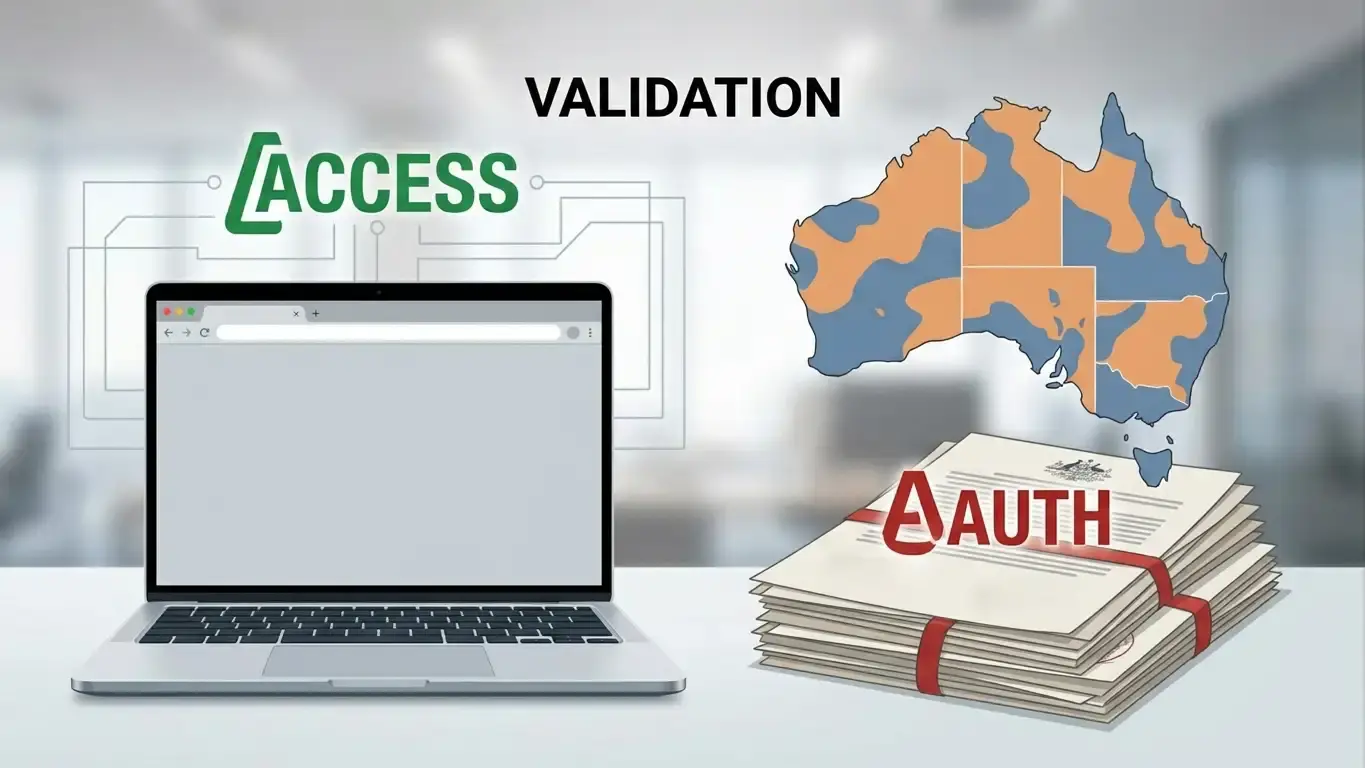
For Australian readers, the central distinction is simple: a website can present Australia-localised pages or be technically accessible without being authorised as an Australian online casino. ACMA states that the Interactive Gambling Act 2001 prohibits providers from offering online casino-style services to customers in Australia. That provider-focused regulatory position should be kept separate from 21bit’s offshore operator and licence information.
What the Interactive Gambling Act means for online casinos
ACMA states that the Interactive Gambling Act makes it illegal for gambling providers to offer certain online services to people in Australia, including online casinos. The rule is directed at the provision of the service, so a reader should not turn it into an unsupported claim that an individual player is committing an offence simply by viewing a site.
An Australian-facing page is not an Australian licence
21bit has an Australia-localised site and registration page, and Australia is not named in 21bit’s current general restricted-country list. Those facts describe site presentation and the operator’s own restriction list. They do not establish Australian regulatory authorisation.
The 21bit trust and licence guide explains the operator and offshore licence separately.
ACMA enforcement can affect access
ACMA can investigate prohibited services and use disruption measures including asking Australian internet service providers to block illegal gambling websites. This means technical accessibility is not a permanent or reliable proxy for legal status. A site loading at one moment does not establish that the service is authorised for Australia.
Advertising is also regulated
Advertising prohibited interactive gambling services, including online casino-style services, is banned in Australia. Additional reforms enacted in August 2026 strengthened parts of the interactive-gambling enforcement and advertising framework, with commencement dates varying by measure.
A practical way to assess the distinction
| Signal | What it tells you |
|---|---|
| Australia-localised page | The site has content or registration presentation aimed at Australia. |
| Offshore licence | The operator has a licensing claim or framework outside Australia. |
| ACMA / IGA position | The Australian federal rules that apply to providers offering interactive gambling services to people in Australia. |
| Site currently loads | Only that the domain is technically reachable at that moment – not that it is locally authorised. |
For a broader summary of 21bit’s product and factual profile, see the main 21bit Australia review. Common questions are collected in the 21bit FAQ.
Separate the headline from the decision
A useful first step is to separate what the page actually confirms from what still needs a current check. For Australian regulatory context, the relevant areas are localisation, Australian law, ACMA enforcement, offshore operator information, access and advertising. This keeps a visible feature from being treated as proof of every related condition. Read the specific wording, note which point is confirmed, and avoid extending it to fees, limits, eligibility, timing or availability unless those details are stated on the page.
Check the detail that affects your own use
The same feature can matter differently depending on what a reader intends to do. With Australian regulatory context, focus on the part of localisation, Australian law, ACMA enforcement, offshore operator information, access and advertising that would change your next action. Keep Australian regulatory rules separate from the product features shown to Australian visitors. Localised pages, AUD support, games and payment options describe access and presentation; they do not by themselves establish Australian authorisation. Check the current Australian regulatory position directly when that distinction matters to your decision. That distinction makes the page more useful than a simple yes-or-no label. Product information and Australian regulatory context answer different questions. When assessing Australian regulatory context, treat localisation, Australian law, ACMA enforcement, offshore operator information, access and advertising as product or process information unless the page explicitly discusses regulation. An Australia-localised presentation or AUD support does not by itself establish Australian authorisation. Keeping these layers separate avoids reading convenience features as a regulatory conclusion and makes the surrounding trust and Australia-rules material easier to interpret. Some details can change faster than the underlying structure described here. Before acting on Australian regulatory context, recheck any current values, eligibility wording, method availability or operational conditions on the casino page. Focus on localisation, Australian law, ACMA enforcement, offshore operator information, access and advertising deserve attention. A current check is especially important where a displayed offer, payment route, document request or availability condition could change over time.
Record what you relied on
For decisions involving an account, money or support, keep a simple record of the information you relied on. In the context of Australian regulatory context, that can mean noting the relevant part of localisation, Australian law, ACMA enforcement, offshore operator information, access and advertising, retaining transaction references or support messages, and keeping the wording of any condition that affects your action. This does not change the casino rules, but it makes it easier to compare what was shown at the time with any later response or account outcome. Closely related steps are not always interchangeable. In Australian regulatory context, localisation, Australian law, ACMA enforcement, offshore operator information, access and advertising can belong to different stages of the user journey and may have different conditions. A statement that confirms one stage should not automatically be applied to another. Read each stage on its own terms, particularly when moving from browsing to registration, from depositing to withdrawing, or from a general product description to an account-specific requirement. Labels are useful for orientation, but they can hide the practical differences that matter. Operator and licence information belongs alongside, not in place of, the Australian rules. Compare those facts separately and avoid using one as a shortcut for the other. If access, advertising or enforcement information changes, rely on the current regulatory information rather than an older description of the site. This is particularly useful when several options sit under one heading. The goal is not to find the longest feature list; it is to identify the option whose current conditions are clear enough for the decision you are making.
Know when to stop and verify
If an important detail is absent, the safer reading is that the page has not established it. For Australian regulatory context, do not infer an exact fee, time, limit, document list, eligibility rule or availability condition from a broader statement about localisation, Australian law, ACMA enforcement, offshore operator information, access and advertising. Pause at that point and verify the missing detail directly. This approach preserves the distinction between confirmed information and assumptions without turning every sourced fact into a vague disclaimer. This page is most useful when it stays focused on Australian regulatory context. Use the relevant section when the decision depends on more detail. A final check should happen at the point of action, not only when first reading about Australian regulatory context. Revisit the relevant information for localisation, Australian law, ACMA enforcement, offshore operator information, access and advertising before registering, funding an account, claiming a promotion, requesting a withdrawal or relying on support. This matters because operational details can change while the general description remains accurate. Check the relevant casino page for the current condition before acting.
Read omissions carefully
An omitted detail should not be converted into a positive or negative claim. In a Australian regulatory context assessment, missing information about localisation, Australian law, ACMA enforcement, offshore operator information, access and advertising simply means that the specific point needs confirmation elsewhere. This is especially important for exact numbers and account-specific conditions. Treating silence as evidence can create the same problem as over-reading promotional wording: the conclusion becomes stronger than the information available to support it. Focus on the detail that would actually change your decision, and verify that detail before acting on it. For Australian regulatory context, review localisation, Australian law, ACMA enforcement, offshore operator information, access and advertising in the order that matches your intended use, then identify any unresolved point that would make you choose a different route or delay the action. This keeps the assessment practical and avoids padding the comparison with features that are technically present but irrelevant to what you plan to do. Information is easier to trust when the stages of the journey fit together. For Australian regulatory context, compare the wording around localisation, Australian law, ACMA enforcement, offshore operator information, access and advertising across the relevant pages and account screens. If one stage introduces a condition that was not visible earlier, treat that as a point to clarify before proceeding. Consistency does not guarantee a particular outcome, but it helps reveal where a user may need a more specific answer before committing money or account information.
Accessibility is not the same as Australian authorisation
When assessing 21bit from Australia, do not use localisation, an offshore licence or a currently reachable domain as substitutes for Australian authorisation. The Australian regulatory question is governed by the Interactive Gambling Act and ACMA’s enforcement framework. Check the current casino page for any detail that can change, especially exact limits, eligibility rules, payment conditions, verification requests and promotional terms. Check changing details at the point of action so an older value is not mistaken for the current one.